Palindrome Parody of Bob Dylan

Sometimes you can’t truly appreciate the cleverness of a parody until you see it next to the original. Here’s an early music video from Bob Dylan:

[youtube=http://www.youtube.com/watch?v=BWkUbNzlcxA]

And here’s Weird Al’s sendup that only makes slightly less sense:

[youtube=http://www.youtube.com/watch?v=Nej4xJe4Tdg]

TechnoratiTechnorati: , , ,

Weird Al for a New Generation

I wrote previously about Weird Al Yankovic and how he has used new media, specifically YouTube and free mp3 downloads, to crack the Billboard top 10 for the first time, two decades after his heyday.

I found out this weekend just how broadly Al has hit it with the youngsters, when my kids were showing me some videos they liked, and they thought they were introducing me to someone new. “Dad, you know about Weird Al already?

Yes, kids, I do, but I have to say Al’s gotten better with age.

Here are a few of his more recent knock-offs, for those who, like me, had lost touch with Al.

The Saga Begins

[youtube=http://youtube.com/watch?v=Q-gi4Nt_xxg]

Amish Paradise

[youtube=http://youtube.com/watch?v=GsfVw9xxoNY]

eBay

[youtube=http://youtube.com/watch?v=HYokLWfqbaU]

TechnoratiTechnorati: , , ,

Executive Physical Feedback

Rich Karlgaard from Forbes.com has an interesting first-person account of his executive physical at Mayo Clinic.

More Mayo (Clinics), Please

I spent yesterday, from 6:30 a.m. to 4:30 p.m., being poked, probed, bled, drained and scanned at the Mayo Clinic’s Scottsdale, Ariz., branch.

I was marched to within an inch of my ticker’s life on a treadmill, made to sit in a claustrophobic “body pod” while wearing only a Euro-weeny Speedo and a shower cap, and held hostage in a small room while a fat lady lectured us on nutrition.

I loved every minute.

What brought me to Mayo was its Executive Health Program. I hadn’t had a thorough physical exam since turning 50. Mayo Clinic enjoys the best reputation in the world for delivering this sort of service, so why not try it?

I was told that the Scottsdale branch is minor-league compared with the Rochester, Minn., headquarters, but after spending a day there, I cannot believe this is true. The quality of the docs and staff, the cool diagnostic equipment–but most of all, the incredible IT system that keeps the docs and staff up-to-the-minute and working in concert–is first-rate.

Word-of-mouth recommendations from satisfied patients have been the most important reason why people choose to come to Mayo Clinic. Another important factor has been stories in news media. Here we have both of these wrapped up in one, a journalist telling his personal story.

Our goal is for the patient experience to be equally positive at all three Mayo Clinic locations. I’m glad to hear Mr. Karlgaard was impressed.

TechnoratiTechnorati: , ,

Free Book Downloads and Vicarious Curiosity


Chris Anderson is writing a new book called FREE (you can click the link to learn more and vote on the subtitles; my favorite is “How $0.00 changed the world.”) In a subsequent post he includes a link to the site where large excerpts of his best-seller, The Long Tail, are available for free. His publisher will be offering his new book as a free downloadable audiobook, and is exploring some ad-supported free book options for people who prefer print.

Here are some other examples of the free phenomenon, and one in particular that is an interesting analysis of how word-of-mouth works.

I stumbled upon Greg Stielstra’s Pyromarketing blog the other day, and signed up for the RSS feed because it Greg’s content seemed interesting and fresh. Check out this take on Vicarious Curiosity as the key to word-of-mouth:

Last Friday night my fifteen-year-old son went to see Pirates of the Caribbean III . The next morning he teased his younger sister Shelby. “You won’t believe what happens to Will,” he said. Upon hearing those words Shelby absolutely had to know what happened to Will and pestered Dominic until he divulged his secret.

Moments later Shelby came into the living room where Amy and I were enjoying our morning coffee. “Can I tell you what happened to Will in Pirates of the Caribbean,” she asked? She squirmed back and forth on the couch awaiting our answer. “Please, please, please,” she said.

What curious behavior. Why would Shelby care about the fate of a character in a movie she hadn’t yet seen. Stranger still, why would Shelby be so eager to tell me and Amy? We hadn’t even expressed any interest in knowing, yet she was desperate to tell. The answer, I think, sheds some light on the forces that power word-of-mouth.

Hopefully I’ve created the curiosity that makes you want to read the rest of his analysis here. And, of course, it made me curious to read some of his other posts.

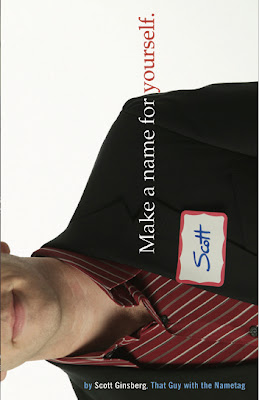
Like this one about Scott Ginsberg, and his book “Make a Name for Yourself,” which he is giving away for free as a PDF download from blog. Scott’s story: one day after leaving a meeting, he left his “Hello, My Name Is…” nametag on, and it changed his life. You can subscribe to Scott’s RSS feed here. Or download the book for free here. I did. I hope to read it in the next few days and post a review.


Meanwhile, back at Greg’s blog, I clicked around some more and found that his book, Pyromarketing, was available as a free download audio book. I’m looking forward to listening to it as I do some yardwork.


Oh, and here’s another value…not quite free…but a great deal. Audible.com has a special right now, that gives you the first three months of its Gold level (1 credit/book per month) for half price: $7.49. I used it last night to get Wikinomics for about $10 less than I can get the hardcover version on Amazon.

But let’s get back to FREE. Here’s a site that’s a directory of the web’s best free stuff.


So, I guess Greg was right about Vicarious Curiosity. It worked to get me to write this post. I just had to tell you!

TechnoratiTechnorati: , , ,, , , , ,

Duty to inform us about Paris Hilton?

Peter Himler calls me (at least via link) one of the “self-anointed new media pundits” and lumps me in among those who “believe the live media interview (is) outmoded.” While I appreciate the link (no such thing as bad publicity), I think he misunderstood what I wrote. At least he misrepresented it.

Calling what I wrote “vitriol” is a bit much. But the good thing is because what I wrote is available for everyone to see (and not buried in a reporter’s notebook), people can reach their own judgment.


:Updated – Peter weighs in with a nice comment below. Thanks for the clarification, Peter.

Actually, what I said was I thought all sides in the controversy had overreacted. Of course there’s a place for the phone or in-person interview… that’s the way we do most of them. And I suggested a way Calcanis and Winer could have done the interview and still have had their “cover” through an audio recording. Journalists quite frequently record interviews; in principle, there’s no reason why Winer or Calcanis couldn’t do the same (provided they cleared it in advance with the reporter.)

My disagreement with Levy was with the sky-is-falling nature of his lament, and his contention that journalists are “not acting out of self-interest, but a sense of duty to inform the population.”

Of course there’s some element of truth in that; as I said, we all have a mixture of motives behind what we do. Some of our motives are noble like that, but also in that mix for journalists is a desire to be first with the story, or get the exclusive.

For example, in my work we have had examples of representatives from two competing network morning shows interested in the same story. When one found out that the competitor had interviewed the subject earlier that day, the reporter put away the camera, packed up the lights, and went back without the story.

Did the story suddenly become something that was no longer important information for the public? Obviously not. Looking for the competitive leg up meant the second network didn’t want to cover the same story as the first.

That’s all fine. They have businesses to run, and a big part of their calculation is what they think will increase ratings. And, in Mr. Levy’s case, if he’s not thinking about writing columns that will attract and engage readers, you can bet his editors are.

Which is why I get a little impatient with journalists who act like everyone in business has ulterior motives, while they as journalists are above it all…just “acting…out of a sense of duty to inform the population.”

“Duty to inform”…is that why Barbara Walters got the post-jail exclusive with Paris Hilton?

So…the phone interview isn’t dead, nor should it be. But when Mr. Levy writes his column, or Mr. Vogelstein his article, they get to take time to say things in exactly the way they want.

Like I am right now. The Republic is not imperiled by some interview subjects like Calcanis and Winer asking for the same consideration. The journalists are free to refuse the request, and then the subjects can decide whether they want to participate or not.

We do lots of media interviews. We’ve done many by email, often suggested by the journalist for his or her convenience. I don’t think the stories were “impoverished.”

If anything, Vogelstein’s story (if he still writes it) will be more impoverished by not including Calcanis and Winer at all than it would have been by at least getting their considered remarks for consideration. He could have done the email or blog interviews and then decided not to use any of the statements, if he didn’t find them useful or genuine.

My fellow “self-anointed” pundits like Dan Gillmor, and Jeff Jarvis simply aren’t doing what Peter insinuates when he says:

The call for all interviews to be conducted via email is short-sighted, if not naive, from a PR perspective.

No one is saying all interviews should be conducted by email. That’s a red herring. Ironically, Wired is exploring crowdsourcing, collaborative journalism. Online interviews with Calcanis and Winer would have been in keeping with that.

TechnoratiTechnorati: , , , , , ,