Facebook vs. Google: Ads and Applications

The news this week in the Facebook vs. Google battle for social networking supremacy has been all about applications or widgets. Next week will likely be about advertising. Here’s a review of the week that was and a look forward to what Facebook likely will be announcing to begin its competition on Google’s online advertising turf.

Applications

Don Dodge has a level-headed analysis of Facebook vs. the OpenSocial platform. Facebook may well decide to incorporate Google’s OpenSocial, but developers aren’t going to abandon the Facebook platform. Certainly having MySpace as one of the OpenSocial sites gives it critical mass, but with 50 million Facebook users, the developers will continue to program for it as well as OpenSocial. It really is about the community, and Facebook has that.

Jeremiah Owyang likewise has a good post on what OpenSocial means, as does his colleague Charlene Li. As she says, developers will deploy for Facebook first, before OpenSocial. Her post was written before MySpace joined the OpenSocial junta, but I still think Facebook has the momentum and critical mass of developers. If it takes a few days to produce two versions of an application, one for Facebook and another for OpenSocial, I think it’s likely developers will do both.

Ads

Next week, Facebook is slated to make some big announcements about how its Social Ad network will be implemented. Techcrunch gave a preview last Tuesday, and has updated it with more detailed information, based on some leaked documents, on what Facebook will announce this Tuesday. Search-based advertising with Google is obviously a huge business, but Facebook’s ability to target demographically (particularly as it now will be gathering more opt-in information about user purchases) and to place ads on other sites (not just within Facebook) will give it an opportunity to deliver relevant advertising.

It’s like my recent Netflix experience: I rate movies I’ve seen, and Netflix suggests others I may enjoy. I’m now getting recommendations based on movies I’ve rated, and many of those are ones I’ve already seen. As I continue to rate those, Netflix further refines the recommendations. I see the new Facebook ad program working similarly, but with suggestions coming from my friends, too. Some people are concerned about privacy implications, but users can either opt out or choose to opt in on a purchase-by-purchase basis.

By the way, I have a Facebook Flyers experiment running, testing some different flyers on the pay-per-click Flyers Pro model. So far I’ve spent the princely sum of about $6.5o for about 18,000 impressions. Given that the Flyers Basic program costs $10 for 5,000 impressions and isn’t targeted as well, the PPC program is a better deal. If you don’t get the clicks, you don’t pay. I will be interested to see if the click-throughs lead to people taking the next step.

This week Facebook was on defense as Google (teaming with MySpace) took a run at the Facebook’s platform supremacy; next week Facebook returns the favor with its enhanced ad platform (and if rumors are correct, also will take on MySpace with a new music offering.)

TechnoratiTechnorati: , , , , , , , , , ,

In Search of a Cure for LFS

Chris Anderson, Editor in Chief of Wired, has published a list of PR spammers who made his “one strike and you’re out” list.

I’ve had it. I get more than 300 emails a day and my problem isn’t spam (Cloudmark Desktop solves that nicely), it’s PR people. Lazy flacks send press releases to the Editor in Chief of Wired because they can’t be bothered to find out who on my staff, if anyone, might actually be interested in what they’re pitching.

I wonder how many of these offenders were “reaching out?” And in the turnabout-is-fair-play department, Chris has posted their email addresses on his blog. It’s a long list. He says it’s not specifically intended to allow spambots to harvest their addresses and subject them to spam, but if that happens, so be it.

Glenna Shaw in HealthLeaders News likewise shares some tips for hospital PR staff in her column, “Please Release Me.” Her pet peeve is PR people who call to ask, “Did you get our press release?”

Chris says there’s no way off his block list. If you’re on the list and really want to send him something important and that will be meaningful and interesting to him, you’ll need to get another email address to send it.

That’s a bit of a problem for his solution, because getting a free email address takes just a couple of minutes, and his ostracized ones will be right back at it (although it might cause them to think twice.)

I think using Facebook for PR/journalist interactions could be a better way. You only get one Facebook identity (Facebook works really hard to keep it this way; there are some exceptions, but for the most part this is true.) So if you block someone (and maybe you wouldn’t want to do it on the first offense, but could give a warning), they stay blocked.

Journalists who want to get better targeted pitches could list in their Facebook interests the beats they cover and the types of stories that are most appealing. This could be done in their individual profiles. One downside to this approach is that it requires someone to be your “friend” before they can see your interests. But with various levels of “friends” coming as a new feature in Facebook, I see it having potential to enable people to show a limited profile (that might include these work-related interests) to a wider community, while keeping the really personal stuff more private. The messaging system in Facebook would enable you to have much more control over the types of messages you get. And don’t get.
There’s no complete cure for LFS (Lazy “Flack” Syndrome), but I firmly believe the social networking sites, be they Facebook or another platform, will play a role in improving relations between PR professionals and journalists. As Bob Aronson said in a comment on the previous post, it really is all about relationships. And sending a thoughtless pitch (or “reaching out” without thinking about whom you are reaching), is a bad way to start a relationship.

It may just end it.

TechnoratiTechnorati: , , , , , , , , ,

The Newest Euphemistic PR Cliché

pr cliche
Sometimes a new word or phrase is developed to communicate more clearly. For example, we say “personalized medicine” instead of “genomics” to help a lay audience understand that this research will enable physicians to prescribe medications more likely to work for an individual because they take a person’s genetic makeup into account.

If a new verbal formulation is exceptionally apt, it can quickly pass into cliché status. Dollars to doughnuts, you know a ton of these. They skyrocket to the top of the usage charts, pedal to the metal past more pedestrian phrasings.

These are all fine; they may indicate lack of literary thoughtfulness, but they aren’t disingenuous. If a cliché briefly encapsulates what would take a much longer phrase to communicate — if it packs a punch — it may aid communication.

Euphemistic clichés are another matter. They’re meant to conceal rather than reveal. Unfortunately for their users, they’re about as effective as Adam’s botanical briefs.

Like pre-owned instead of used cars, or an initial investment replacing talk of a down payment, or agreement being the more delicate way of describing a contract, apparently someone in the PR world did some focus group research and found out that “pitch” has negative connotations.

So now they don’t “pitch” a story idea: they “reach out” to journalists.

Maybe it’s not the newest PR cliché, but besides rapidly becoming dreadfully overused, it also causes bad grammar, in the form of compound prepositions.

I think any communication with reporters that uses language like…

“Hi, I wanted to reach out to you about…”

Should be an immediate candidate for the Bad Pitch Blog. Or the Bad “Reaching Out” Blog.

Grammatically speaking, “reaching out” practioners almost always string at least two prepositions together. And once they get started, “reacher outers” can’t seem to stop, even when they’re not pitching journalists. For instance, I got an email from a PR agency rep last week that said “we’ve reached out to Dr. X regarding speaking….”

How about, “We’ve invited Dr. X to speak…”?

Some of our blogger friends (like Shel Israel) are concerned that PR people won’t be able to break their command-and-control addiction to spin in order to participate effectively in the social media conversation. That’s why, at a PR measurement conference we attended, Shel said companies should just hire a bunch of young people to do social media, instead of trying to retrain PR staff. (See his comments on that post.)

But the reality is that spin and euphemism aren’t keys to long-term success in media relations, either. Good PR practitioners take time to develop solid story ideas and to determine which journalists may find the topic interesting. Then they offer the story: sometimes as an exclusive, sometimes not. And the reverse happens, too: journalists have story ideas and contact PR sources for help in finding experts who can comment. It’s a symbiotic relationship, as journalists get good story ideas and access to subject experts, and the PR pros’ clients hopefully are included in the stories. If it isn’t good for both sides, the relationship doesn’t last.

“Pitching” may carry some traveling salesperson connotations, so I’m not advocating a return to the old cliché. But instead of the mushy new euphemism, “reaching out to,” why not use more concrete verbs like “calling” or “writing” or “contacting?”

Does anyone really think that a journalist who is “reached out to” dozens of times a day fails to see through this language?

I’m not saying the reacher outers should be sent to a correctional facility, but their communication should be hauled away by sanitation engineers.

TechnoratiTechnorati: , , , , ,

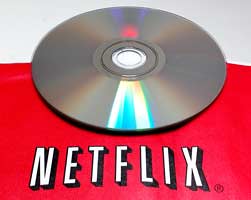
Netflix Digital Transition Requires Browser Agnosticism

Netflix washington post
The Washington Post has a good article today about Netflix (free subscription may be required) and the transition it needs to make from DVDs by mail to online digital delivery.

“It’s like a three-act play, and we’re in the opening minutes of the second act,” says Steve Swasey, vice president of corporate communications at movie-rental Web site Netflix, as he gives a tour of the company’s Rockville processing center.

Act 1, as far as the company is concerned, was getting people used to renting DVDs over the Internet. Act 3 is “no more DVDs and everything is online.”

Does joining when there are 8 million Netflix customers make me a late adopter? We finally signed up for the two-week free trial yesterday; I love the idea of no late fees and unlimited rentals, and that it offers a Long Tail of selections. For example, in our local video store it’s easy to find the Reloaded and Revolutions sequels to The Matrix, but the original is hard to find. And my wife, Lisa, is looking forward to watching lots of documentaries. We’re looking forward to having access to this huge back catalog.

One initial complaint: the new online viewing feature is for Windows only, and only for Internet Explorer 6 and newer. It’s one thing for corporate IT departments to mandate Windows-only, but a company that wants to sell to the home market (like Netflix) will be missing market share with such an approach. In the last quarter, the Mac’s market share grew to 8.1 percent of the U.S. market. Given the Windows dominance of the corporate IT world, that means the Apple share is even stronger among home users.

Second complaint: I tried to view videos on my daughter’s Windows XP machine in IE 7, so I downloaded and installed the Netflix client software (after downloading IE 7 because it wasn’t compatible with Firefox). Then when I tried to watch season 1 of The Office, it just prompted me again to install the software. Never got to watch it.

I’m sure the DVDs will be great when they arrive Tuesday. Obviously, as Mike Musgrove’s article describes, Netflix has the system for delivering DVDs well orchestrated. But support for Macintosh and browsers other than Internet Explorer will be a key to Netflix successfully making the transition to digital delivery.

Apple’s iTunes obviously serves both Macintosh and Windows. The TV networks, in their ad-supported streaming of their primetime shows, support both platforms and don’t limit to one particular browser. Netflix doesn’t seem to have a true competitor in the DVD-delivery business, but it will have serious competitors in digital delivery.

Microsoft now has less than 65 percent of the browser market. If Netflix continues to ignore more than a third of the potential users of its movie streaming service, it will not be successful in its DVD-to-Digital transition.

TechnoratiTechnorati: , , , , , , , , ,

Welcome, MarketWatch Readers

Andrea Coombes, the assistant personal finance editor at MarketWatch, contacted me last week through my blog for an article she was writing about use of Facebook for personal vs. professional networking, issues for employees and possible concerns for employers. We had a great discussion; it was good talking with someone who had spent some time in Facebook herself, and wasn’t just writing about some unfamiliar phenomenon.

Andrea wrote two articles that appeared online today: the first, On a need-to-know-everything basis, is a balanced review of pros and cons of the top three networking sites for professionals: Facebook, LinkedIn and MySpace. The sidebar has six Tips for staying safe in social networking sites.

Here are a few of the posts on my blog that deal with topics I discussed with Andrea. I said employers developing social media policies should ask their employees to make their geographic network primary, and their company affiliation secondary. I said it is myopic (a little medical lingo there) for companies to block Facebook access at work. (In Andrea’s article, Charlene Li agrees.) And we also talked extensively about Facebook’s limited profile, and how that can be used to provide less personal information to professional colleagues than you share with family and friends. With various levels of “friends” on the way, it will soon become easier to distinguish between people with whom your bare your soul and those with whom you chat about “Da Bears.”

My Facebook Business page has all of my Facebook-related posts gathered in one place. If you like what you see here, you can subscribe to my RSS feed, get updates by email, Friend me in Facebook, or follow me in Twitter to get notification when I write something new.

TechnoratiTechnorati: , , , , , ,