Is high LDL-C alone a problem?

As Dave Feldman says, “We don’t know.”

But today I’ve started participation in the process he set up that will help us get the answer.

The standard blood lipid panel includes several measures and calculations that doctors (and particularly cardiologists) use to estimate health and future risk of a heart attack, stroke or some other cardiovascular event.

  • Triglycerides
  • HDL-C
  • LDL-C (calculated)

You’ll also see a Total Cholesterol figure, but almost everyone would agree that it’s practically meaningless.

High Triglycerides (> 150 mg/dL) and low HDL-C (< 40 mg/dL for men and < 50 mg/dL for women) are two of the five elements that go into a diagnosis of metabolic syndrome. Others include:

  • High blood pressure (Systolic > 130 mmHG, Diastolic > 80 mmHg)
  • High Blood Glucose
  • Abdominal Obesity (waist > 40 inches for men or > 35 inches for women. Note that this is the measurement at the belly button, or the natural waist, not the jeans waist size.)

Metabolic syndrome is diagnosed when you meet any three of those five criteria, and the medical community clearly recognizes that metabolic syndrome massively increases your risk of cardiovascular disease, diabetes, many cancers and even Alzheimer’s and other forms of dementia.

What isn’t included in the diagnosis of metabolic syndrome?

LDL-C.

It’s not even a factor that’s considered.

And yet it’s the one number which, if elevated, will get you a referral to a cardiologist, even if all of your other factors are optimized.

I know. It happened to me.

In January of this year I had a physical with a new primary care physician, complete with the standard lipid panel.

My Triglycerides? 45 mg/dL. Outstanding.

HDL-C (the “good” cholesterol)? 74 mg/dL. Also excellent.

Blood pressure. In the normal range. So was blood sugar.

I had lost 60 lbs. from my peak and had gotten rid of my abdominal obesity.

Every marker looked great.

Except LDL-C. That was 224 mg/dL.

Most cardiologists want that below 100, and they consider anything above 189 very high.

That’s why I got the call from my new primary care physician and a referral to cardiology, with a suggestion that I might want to consider taking a statin.

As part of that evaluation I got a coronary artery calcium scan, and my score was 0, which indicates low risk. I didn’t take the statin.

But the CAC score only measures the plaques that have calcified, not the newly formed ones. So like Dave, I’m cautiously optimistic that a high LDL level on its own doesn’t increase my heart disease risk. But we really don’t know.

That’s why I’m thrilled to be part of the Lean Mass Hyper-responder study, which will follow 100 people like me for a year. We all have high HDL, low triglycerides and LDL of more than 100.

This morning I’m in Los Angeles, where I had my first coronary CT angiogram with contrast, to measure the current extent of any atherosclerosis.

I’ll be taking blood ketone measurements every day for the next year to demonstrate that I’m staying on a ketogenic diet, and then a year from now will repeat the coronary CT angiogram.

My results, along with the others, will help the researchers understand whether LDL on its own is something to be concerned about, in the absence of other risk factors.

We all owe Dave and the Citizen Science Foundation huge thanks for their perseverance in making this study happen, and in raising the funds for it.

This is information that’s important to know, but Pharma would never pay for it.

And while many of us have been involved in individual n=1 experiments with our own diet and health, pulling together a large cohort like this will hopefully help us get statistically significant data that can help others make informed decisions.

I hope I’m right, and that having elevated LDL-C without other risk factors will be show to not increase atherosclerosis progression.

But if that turns out to not be the case, that’s important information to have as well, and could lead to treatment modifications.

I’m confident that I’m in much better health than I was five years ago.

Whatever the outcome of this study, within the next couple of years I’ll have better data to guide future decisions.

In China in 2016 vs. earlier this year with three 20-lb. jugs of kitty litter illustrating weight lost.

Optimizing Health through Diet

In this video from our friends on the Low Carb Down Under channel, Dr. Paul Mason , one of my Health Sherpas, covers many interesting points. Some of the highlights:

  • His personal experience with developing metabolic syndrome, and the relative lack of dietary teachings he received in medical school.
  • How medical school teaches doctors to prescribe medications, but not how to de-prescribe medications when patients begin to reverse metabolic syndrome.
  • The vegan vs. carnivore dietary controversy, and the relative strengths and drawbacks of each. Both are superior to the standard Australian (or American) diet – or SAD.
  • Limitations of nutritional research, including food frequency questionnaires that rely on faulty memories, the healthy user bias and misclassification of pizza, for example, as “red meat.”
  • Giving children in Ecuador one egg a day prevented stunted growth. Red meat, dairy and eggs provide the fat needed for brain development in children.
  • The strongest experimental design is a blinded randomized control trial (RCT). A meta-analysis gathers related RCTs and re-analyzes them as if they were one larger study. If you see the words epidemiology, association or correlation in the discussion of a study, you should be hesitant to rely too firmly on the results because of possible confounding factors.
  • At about the 24:00 mark in the video Dr. Mason discusses environmental issues related to plant and animal-based agriculture, and how grazing animals replenish the soil.
  • Cholesterol is essential to human life and is part of all cells. Lipoproteins, e.g. Low-Density Lipoprotein (LDL) and High-Density Lipoprotein (HDL) transport cholesterol through the blood. Starting at about the 40:00 mark, Dr. Mason discusses the bad science behind the saturated fat/LDL hypothesis, and a meta-analysis that showed LDL levels had an inverse relationship to all-cause mortality: the higher your LDL levels, the longer you lived.
  • Damaged LDL is the the kind that leads to atherosclerosis, and this damage occurs in two ways: glycation (due to high blood sugar levels, which come from too much sugar and carbohydrates), and oxidation. Vegetable and seed oils are more likely to become oxidized, particularly at lower temperatures.
  • The Triglyceride/HDL ratio is a good gauge of whether you have small dense LDL (the dangerous kind, which is called Pattern B), or big, fluffy LDL (Pattern A). This ratio, which you can calculate from a standard lipid panel, is a far better predictor of heart attack risk than LDL cholesterol alone.
  • The problem with laboratory test reference ranges is that they reflect results that encompass 95% of the population, so just because your lab results are in the “normal” range doesn’t mean they’re in a healthy range. Much of the population is not healthy.
  • High protein and Vitamin D are keys to bone density, and in a study of post-menopausal women and men over 65 those with the highest protein intake actually reversed bone loss.
  • Fasting or time-restricted eating are especially helpful for people who are metabolically unhealthy. Even without changing what you eat, you can improve your health by limiting when you eat. (I would add that limiting carbs and becoming fat-adapted makes it easier to limit eating windows.)

There’s lots more, so as you have time I’d encourage you to watch it all. In addition to the points I’ve highlighted above, you’ll hear him drop some truth bombs that you might find jarring because they directly challenge the low-fat, high-carbohydrate orthodoxy promoted by the U.S. government and various medical societies.

An orthodoxy for which the scientific evidence is seriously lacking.

Along with my other Health Sherpas, Dr. Mason’s perspective has helped to reorient my thinking on what is a healthy diet as Lisa and I have been on our health journey over the last few years.

We’ve each lost more than 50 lbs. and have been informally coaching others who have massively improved their health, energy and vitality, with significant weight loss as a welcome side effect.

Based on that experience, I retired in August to launch a new venture we’re developing together with a long-time friend and primary care physician who has had an interest in metabolic syndrome for decades.

We’ll be providing education, community support and coaching to people looking to turn back the clock on their health. Some also will be eligible to take advantage of a direct primary care option.

If you’re interested in learning more, send me an email and I’ll be in touch to give you opportunities for a preview.

Attacking the Axis of Illness through a Ketogenic Diet

While a low-carbohydrate ketogenic diet has been increasingly recognized as an effective way to lose weight, and while weight loss may be the initial motivation for many to embrace it, the health benefits are much broader and deeper than just weight loss.

As David Harper, Ph.D. says in the video below, keto benefits beyond weight loss include:

  • Lower blood triglycerides and higher HDL cholesterol
  • Reversing insulin resistance, making blood sugar and insulin more stable
  • Less systemic inflammation and pain, and
  • Improved energy, stamina and flexibility.

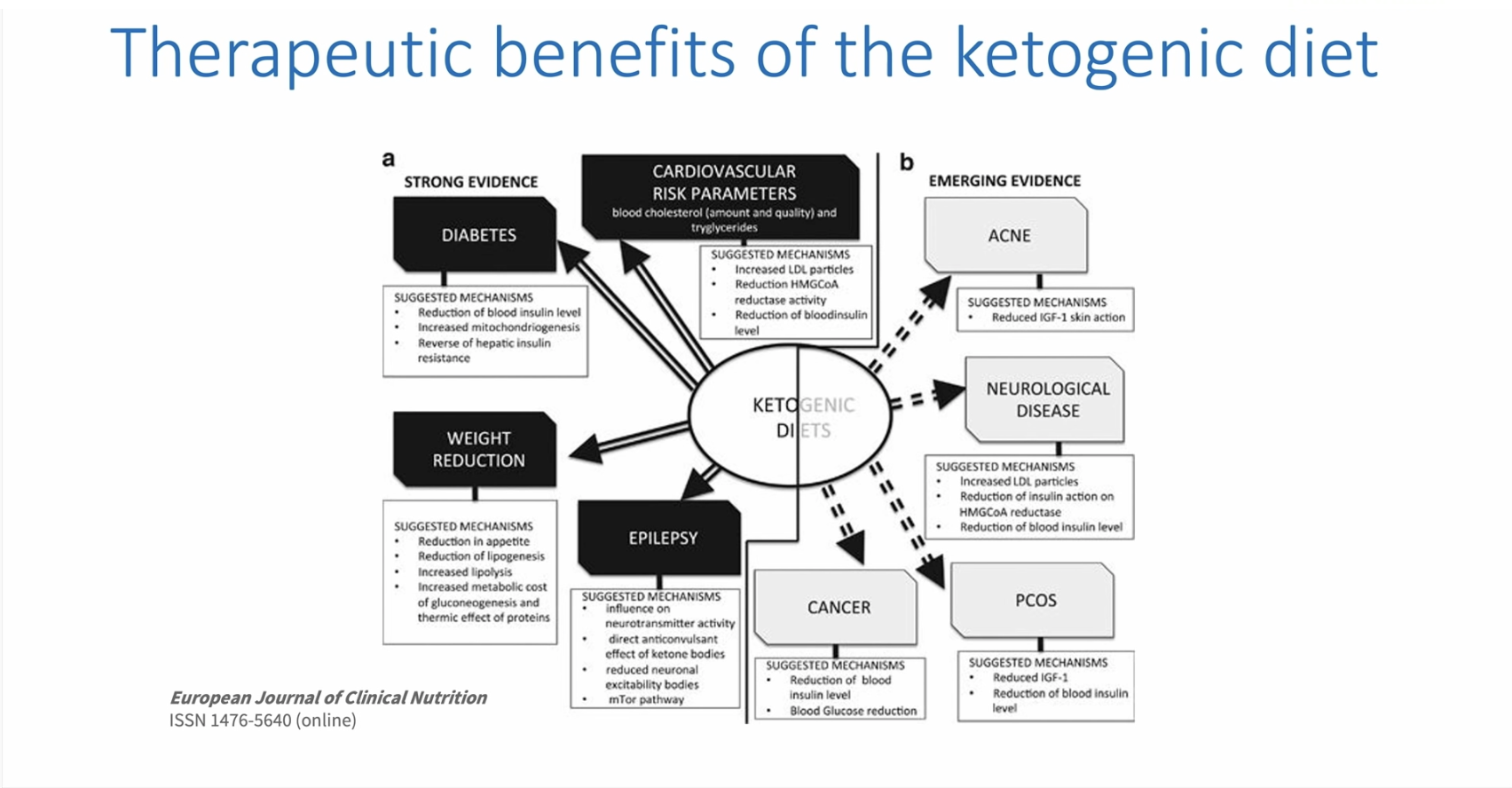
He also highlights several diseases for which strong evidence exists showing that a ketogenic diet is beneficial, as well as others for which the evidence is emerging.

The money quote…

I actually think that all of these chronic diseases…are all the same thing…. I think in the next 10 years you’re going to see a lot of medical research looking at the mitochondria…and that’s where we’re going to find the root cause of chronic disease.

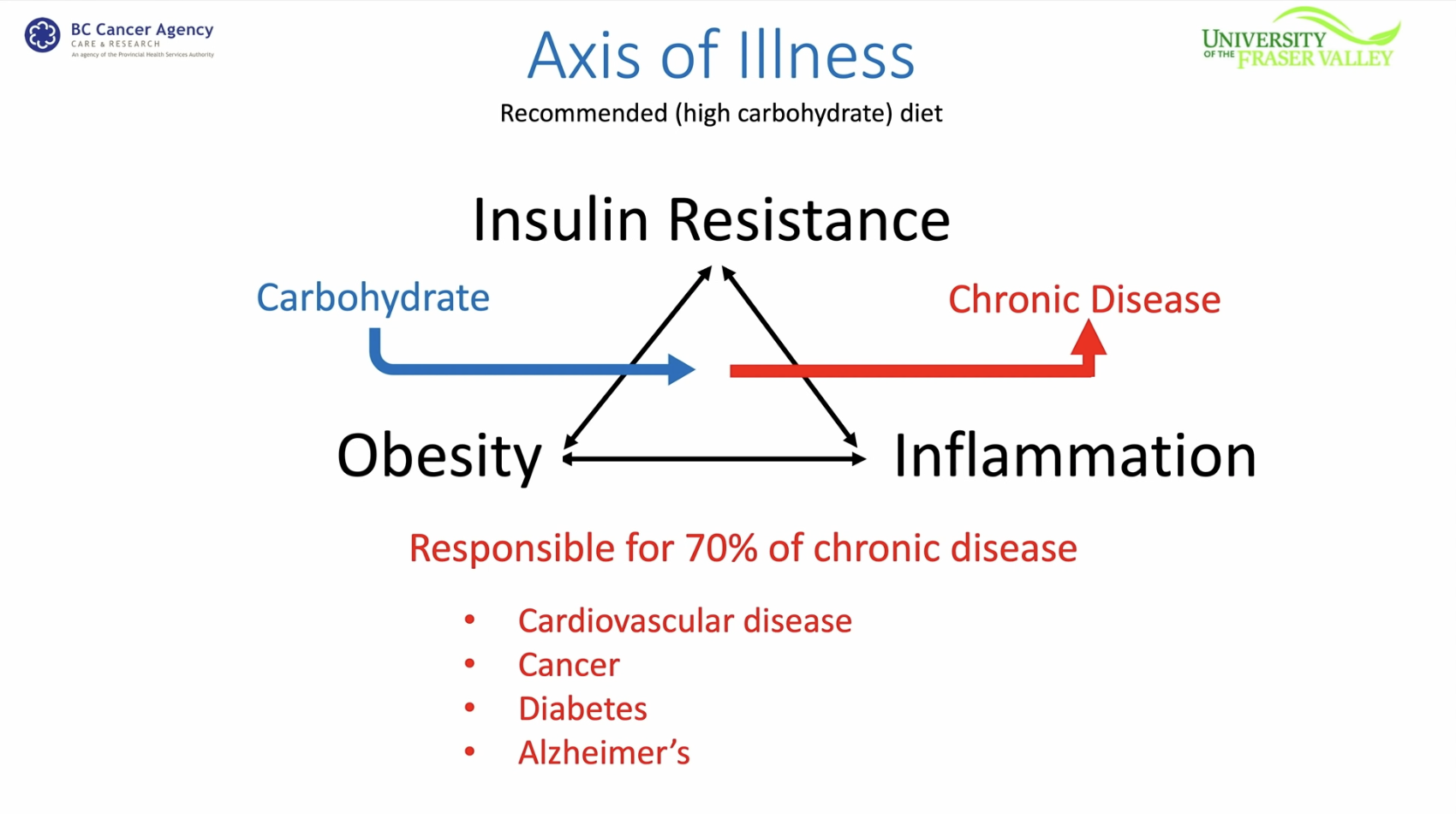
Dr. Harper also presented an interesting graphic that illustrates how a high-carbohydrate diet drives insulin resistance, inflammation and obesity and resulting chronic disease.

Finally, he shares information about a study in which he is involved that is using a ketogenic diet in addition to customary therapies in women with breast cancer, and shows PET scans of these patients who have seen reduction in tumor size and extent.

Dr. Harper is the author of a book called BioDiet: The Scientifically Proven, Ketogenic Way to Lose Weight and Improve Health, which I ordered based on this presentation (as well as favorable reviews from two of my Health Sherpas, Nina Teicholz and Maria Emmerich) and expect to receive today.

Well worth your time to watch:

I retired in August from leading Mayo Clinic’s social media program to start a new venture with my wife Lisa and a family physician friend I’ve known since high school. 

He has been interested in metabolic syndrome for more than 20 years, and with nearly nine of ten of Americans having at least one marker of metabolic ill health, he sees this as the major health challenge we face as a society.

Our mission is to help people take control of their own health through lifestyle changes. A low-carbohydrate diet as Dr. Harper describes is one key element.

I was motivated to launch this venture by our health journey from the last few years. Lisa and I have each lost more than 50 lbs. and maintained that weight loss for 18 months (so far). 

For the last 10 months or so we’ve been coaching others in making similar changes, and they’ve experienced great results too. 

We also have medical lab test results that show significant health improvements, and we feel better than we have in 20 years. It was really rewarding to see people we were coaching turning back the clock on their health, and I found myself saying, “I’d like to do this full-time.”

As it turns out, I can.

That’s why I say my August retirement was really instead the beginning of a third career. I worked at Mayo Clinic for 21 years in health care media relations and social media, after 14 years in politics and government.

I hope my third career will be longer and have more impact than either of the first two. 

We’re currently in the Alpha phase of development, as we plan to offer educational resources, online community support and individual and group coaching.

If you’re interested in being one of our Alpha members who will help us shape and refine the services, send me an email and I’ll be in touch to give you a preview.