Breakfast with Evie

I had a delightful experience this morning before I left for work: having breakfast with my granddaughter, Evelyn.

There was a time when this wouldn’t be such a remarkable event. For most of human history, families typically lived in close proximity across several generations. In many cases, extended families might live under the same roof.

The mobility made possible by the internal combustion engine brought many benefits, but one of downsides from a parental perspective is that children grow up and move away instead of raising their kids close to home. We’re happy for the opportunities, but we miss our babies (and their babies).

I’m now starting to appreciate the bittersweet moments we created for my parents when my wife Lisa and I moved to the Twin Cities (100 miles away) in the late 1980s, taking our two children with us in pursuit of gainful employment. And when we moved back home to Austin in 1994, with two more little girls (one of whom turned 20 today!) and a baby boy on the way, it was really special to be able to be close to their grandparents.

Still, during that eight-year period, I think my parents probably got to see our kids about every six weeks or so.

Now my two oldest kids are married, and my daughter Rachel and her husband have moved to Grand Rapids, Michigan, where Kyle is going to seminary. They have two children, Evelyn and Judah. Anyone who has been in one of my presentations has been introduced indirectly to Evie.

But I see Evie and Judah much more frequently than my parents saw our kids, even though we’re about 500 miles away.

This morning I had a really special experience that illustrates the power of technology to strengthen those family bonds weakened by distance. Through the magic of Skype (and I do mean magic), I had breakfast with Evie (click photos to enlarge):
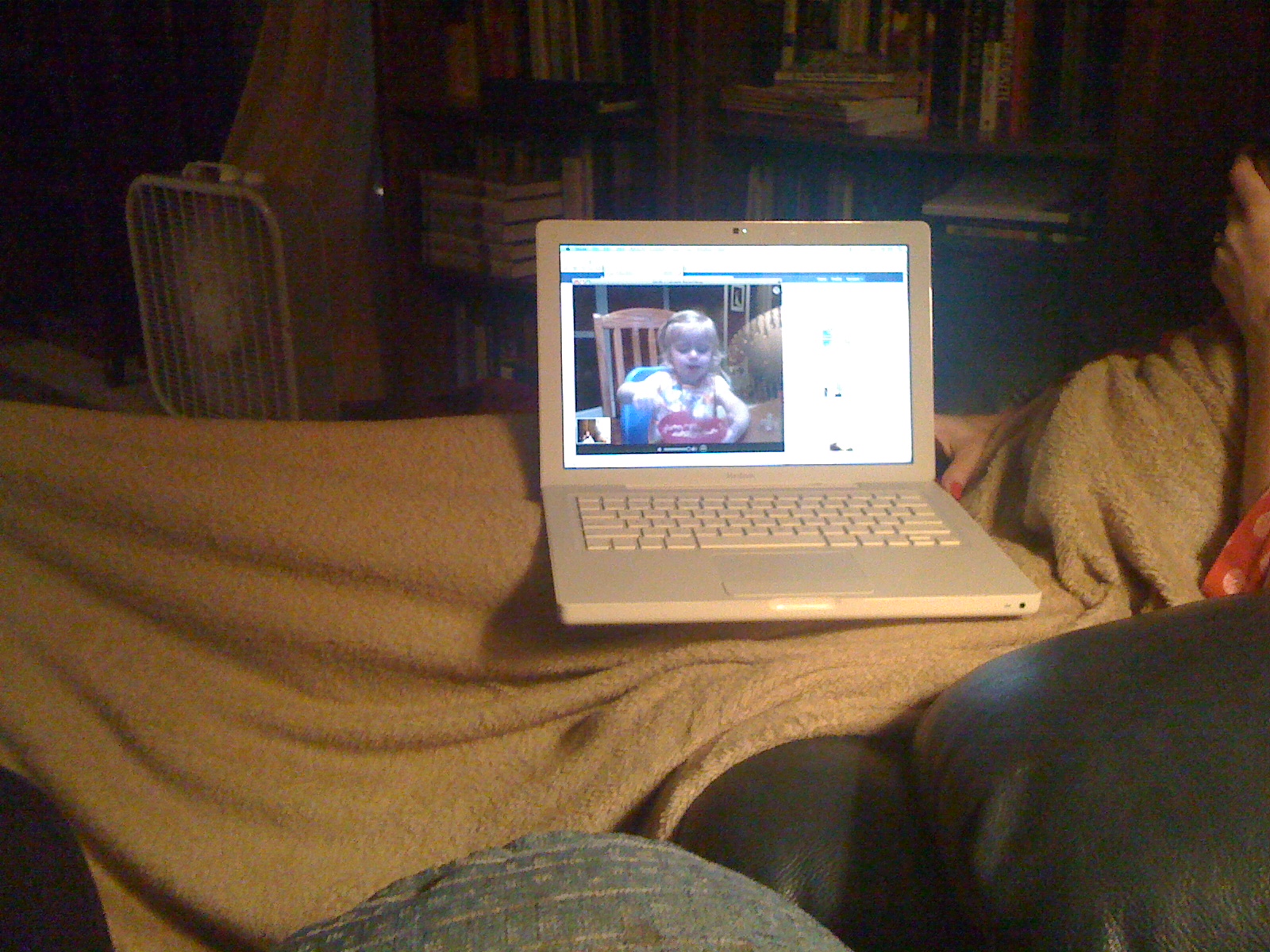
Evie was having a bowl of oatmeal at her table in Grand Rapids at 8 a.m. her time, while I had my gluten-free Corn Chex at 7 a.m. my time in Austin, a nine-hour drive away.

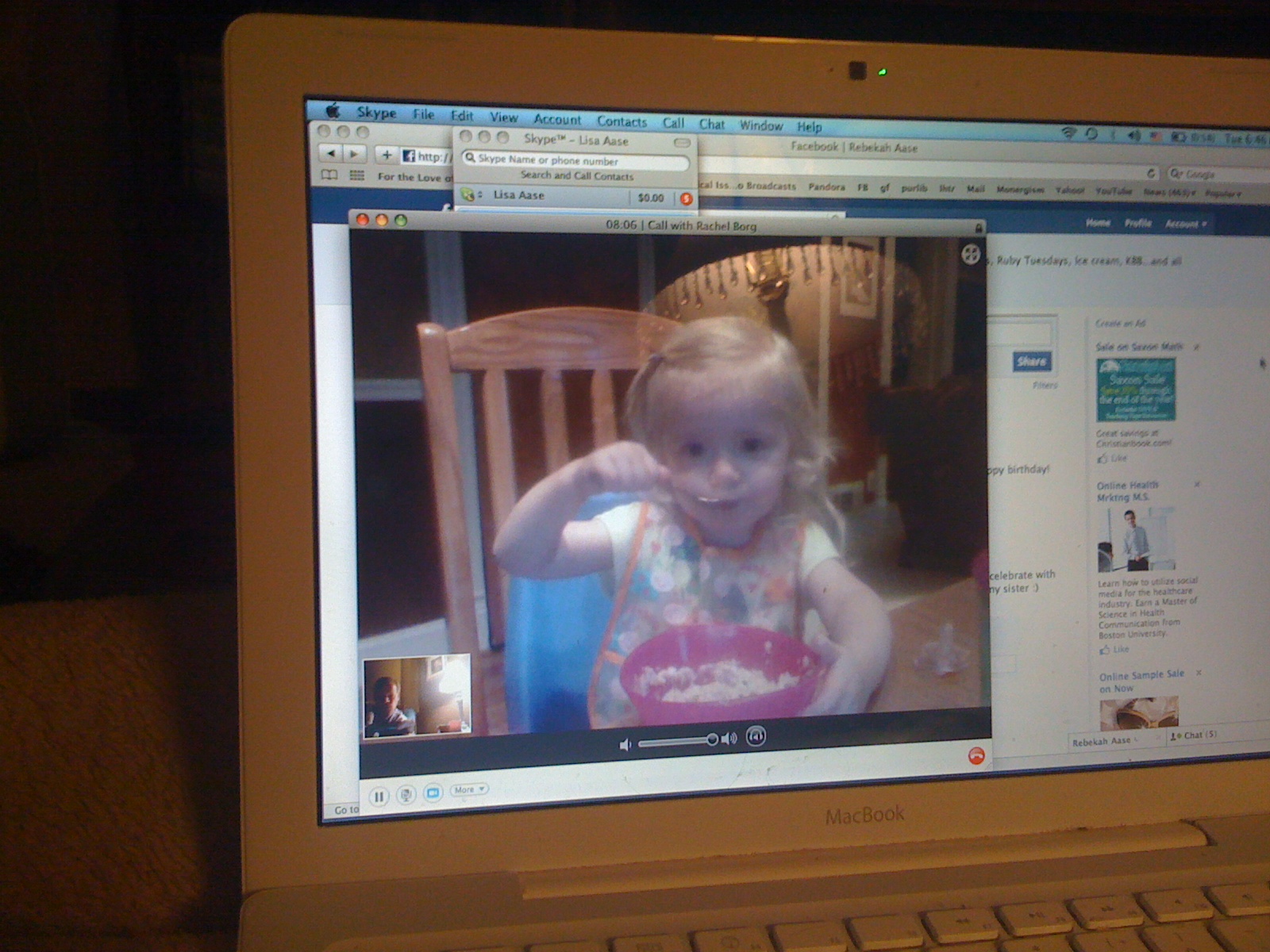
For us, though, her breakfast with “Bapa Eeee” was just like being directly across the table from each other. And I think I speeded up her eating, because when Grandpa took a bite, so did she:
What applications can you see to enrich your life and work by using free videoconferencing?

28 Minutes with the Chancellor

One of the points I regularly make in discussing social media tools is the opportunity they provide for providing in-depth information to people who have a particular interest. The example I most frequently cite is this 10-minute video on myelofibrosis, which has been viewed more than 5,200 times on our Mayo Clinic YouTube channel.

It doesn’t matter that Dr. Mesa’s video lacks mass appeal; it provides important information for patients with myelofibrosis and for their families, giving them just what they need, and what they are interested in seeing because they have strong personal motivation to learn about this type of blood cancer.

What you see embedded below is another example of a video with limited mass appeal. Shawn Riley (@rilescat), who blogs at HealthTechnica, hosts a regular TV talk show called Health Connections on our local Austin, MN PBS affiliate, KSMQ. When we announced our new Mayo Clinic Center for Social Media, the producer of Health Connections asked if I would come on the program to talk with Shawn about social media in heath care, and about our new center. This interview was broadcast locally last Tuesday, and now the 27:47 program is available (thanks to viewers like you) on YouTube.

I don’t expect this video to get anything near the traffic of Dr. Mesa’s discussion of myelofibrosis. But if you’re among the global niche those interested in applying social media in health care, you may find it helpful.

On World Peace, Labor Day and Blocking Facebook

I’m as big an advocate of social media as you’re likely to meet. Still, I think Washington Post columnist Kathleen Parker went a bit overboard in yesterday’s offering, Facebook and social media offer the potential of peace:

Not to be a Pollyanna, but it is striking to realize that peace becomes plausible when barriers to communication are eliminated. More than 500 million people use Facebook alone. Of those, 70 percent are outside the United States. MySpace has 122 million monthly active users, and Twitter reports 145 million registered users.

I actually think Ms. Parker does have a bit of the Pollyanna principle running through her argument. And it’s kind of nice for me to have people like her occupying the “extreme optimism” end of the social media spectrum. It makes me seem more moderate. I agree that building more friendship connections is helpful, but I’m not anticipating a Nobel Peace Prize for Mark Zuckerberg.

While I don’t see social media ending the Middle East conflict, I do see these tools playing a huge role in connecting and strengthening relationships within organizations and among those with common interests.

That leads me to one of Parker’s paragraphs that I thought was particularly illuminating, as it relates to the practice of many companies in blocking access to social media sites from their corporate networks:

Obviously, some countries don’t like these media for the very reasons we do. People talk. Facebook is blocked in Syria and China and until recently was also blocked in Iran, Pakistan and Bangladesh. Where freedom flourishes, so do open channels of communication.

As we celebrate Labor Day in the United States, maybe opening access to social media sites at work wouldn’t rank among the all-time achievements for employee-friendly workplaces. It probably won’t usher in a Millennium of peace, either.

But at least it would make your company more open than China, Syria and Iran.

Does your company block access to Facebook, Twitter and YouTube at work?