Cooperstown Memories

Last week I had the pleasure of speaking to a meeting of human resources leaders from the Hospital Association of New York State (HANYS) at the Otesaga Resort Hotel in Cooperstown, New York. It’s a beautiful and historic facility (I have posted some pictures below), and I enjoyed getting to interact with the HANYS group.

But one reason I was really looking forward to the trip was the chance it gave me to visit a place I had dreamed of for about 40 years, the Baseball Hall of Fame. I unfortunately only had about an hour to case the place, but here’s my video report:

It isn’t exactly the SPAM museum, the tourist attraction in my hometown of Austin, Minn. (located just 4 blocks from “Old Main”), but still is definitely worth the trip. Below are some photos, first of the Otesaga, and then the baseball shrine (click to enlarge):


The Otesaga at night
Golf hole view from the Otesaga dining room

Jason Werth’s spikes from the 2008 World Series. For more about why this was cool for me, see here, here and here.
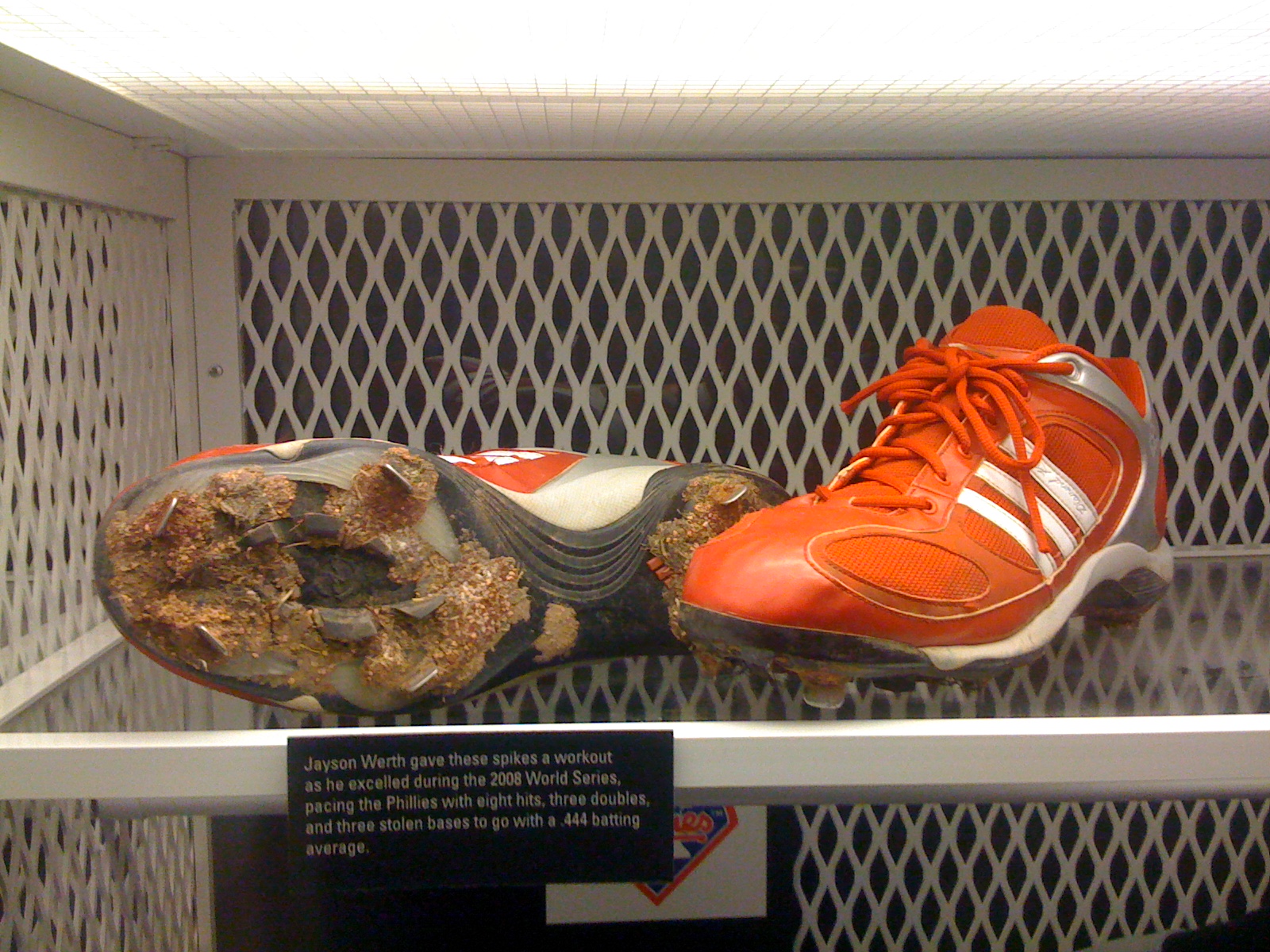
Jayson Werth's World Series Spikes

Harmon Killebrew was my first boyhood sports hero, so it was neat to see the plaque immortalizing him:
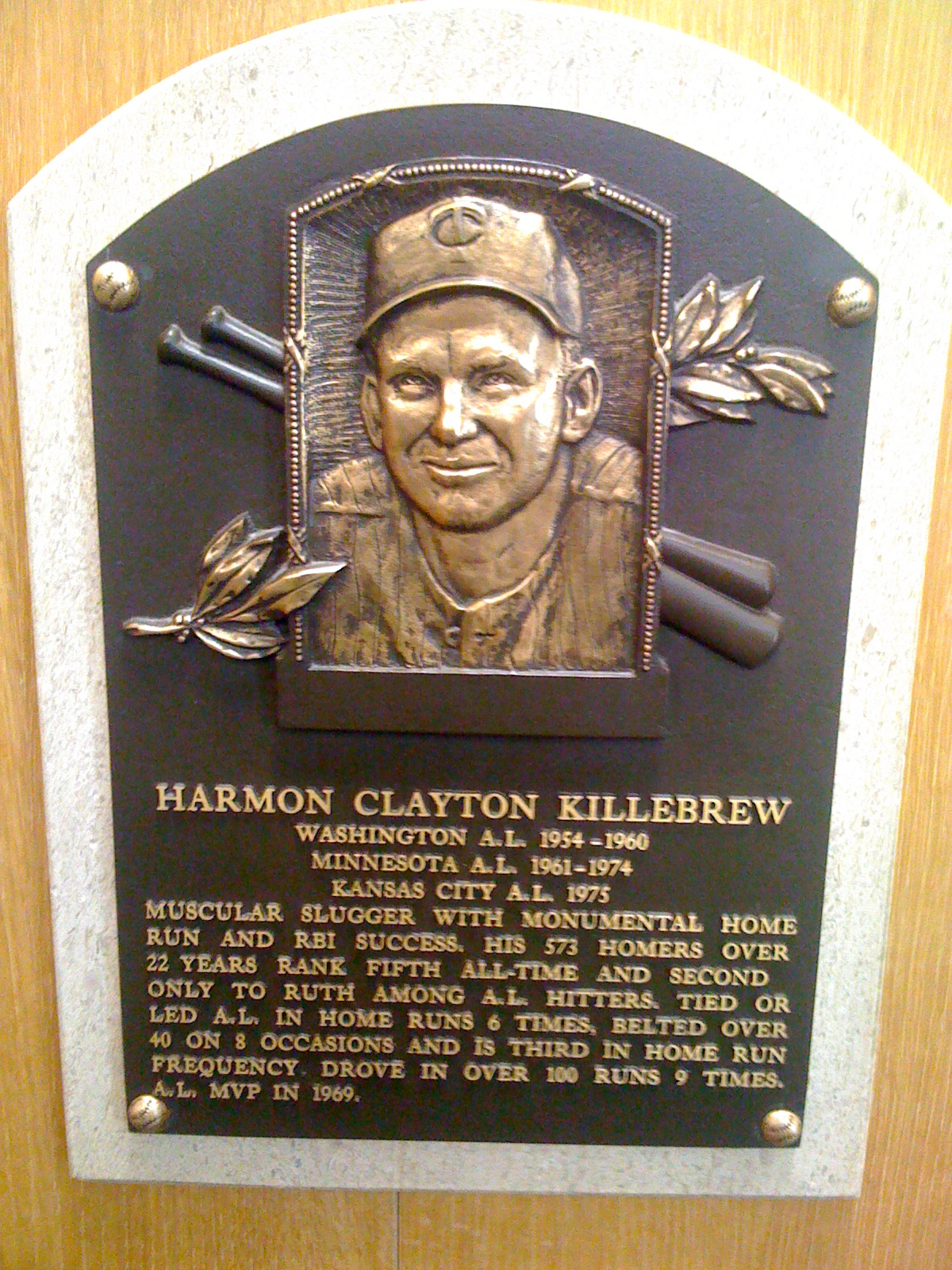
Harmon Killebrew's Hall of Fame Plaque

And finally, here is a picture of me with Kirby Puckett’s plaque. I’m thinking this will be my new Twitter avatar:
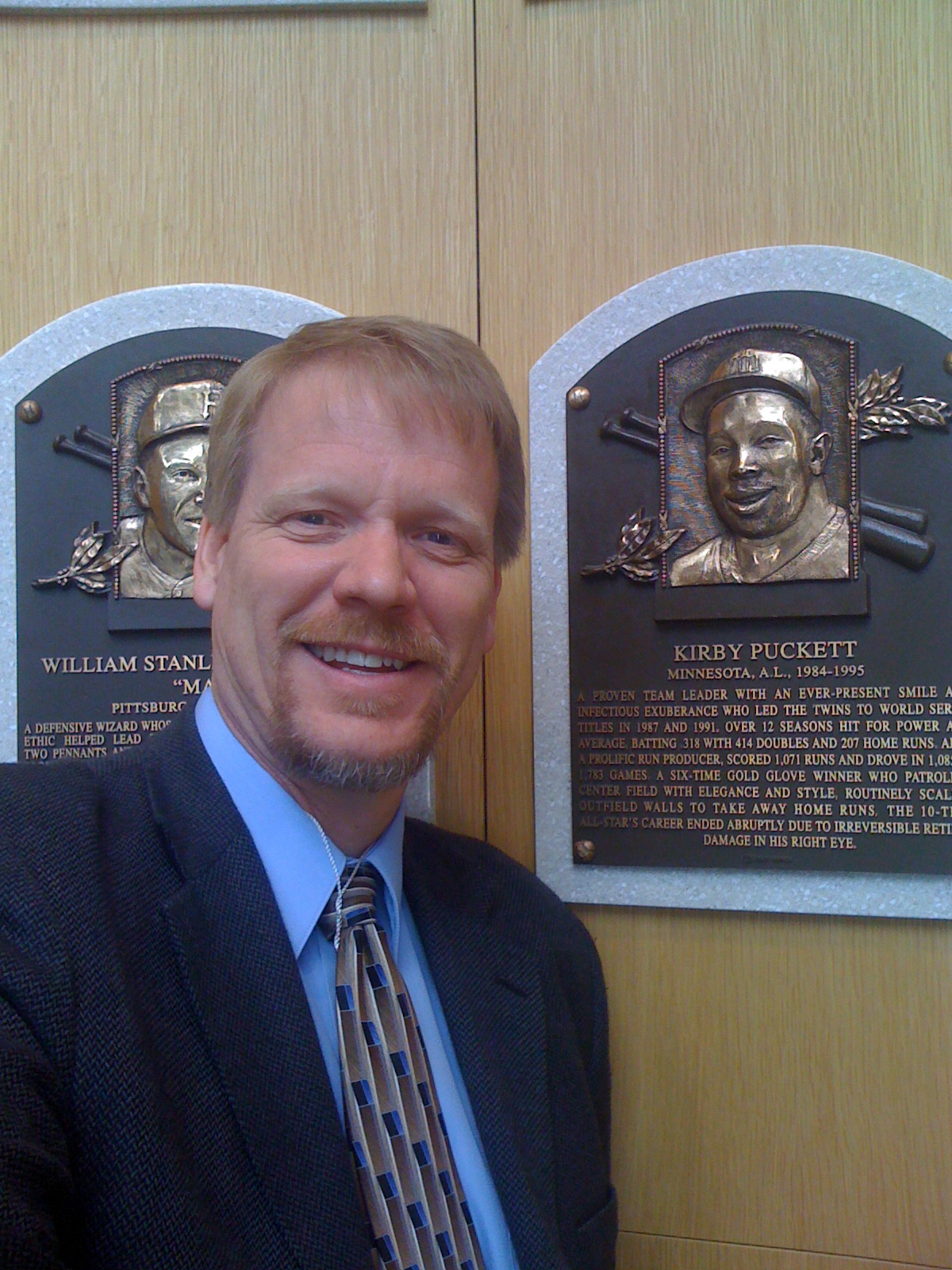
Kirby and Me

G’Day Alfred Health

I’m sure they’ve never been greeted like that before. Kind of like my work colleague, Sara Bakken, who married a guy named Eric Lee. Now nobody doesn’t like her. Or my friend Kevin, who after the first Matrix movie grew tired of being called “Missss-ter Anderson.”

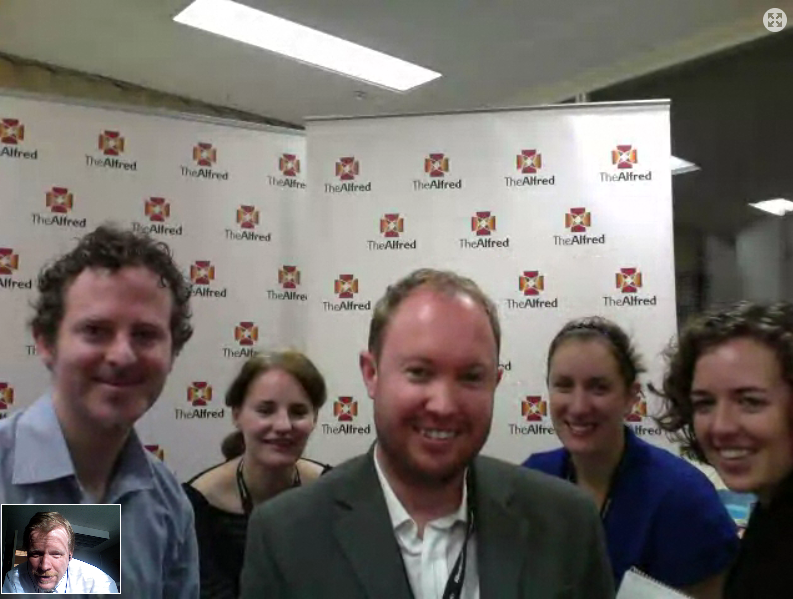
Anyway, as I tweeted earlier tonight, I had the distinct pleasure of a Skype videoconference at 6 p.m. CDT with the communications team from Alfred Health in Melbourne, Australia. It was about 8 a.m. Wednesday for them:

It was a great discussion and we covered a lot of ground in 30 minutes. Being a public hospital, their challenges are somewhat different from those we have in the U.S., but the point I made with them is not to necessarily emulate exactly what we have done with social media tools, but to see how they can be used to meet the goals for their health system.

So, for example, they may want to see how social tools can help with behavior modification, and perhaps even to provide low-cost or no-cost medical guidance to patients so that they don’t need to come to the hospital. Among the limitations we generally have in the U.S. is that there is little economic incentive for health care providers to invest in prevention, because for the most part seeing patients is the way they get paid. So instead of using social tools to make patients aware of unique services, which could lead to increased demand, they may want to apply them to prevention or support groups or guidance in when self care is appropriate.

In follow-up I mentioned our Mayo Clinic Symptom Checker iPhone app, and how that (or something like it) could play a role in helping patients be wiser about when they need to seek care.

What do you think? How can social media tools and other digital platforms be used to improve health and health care in places like Australia or Western Europe, where the health care systems are much different from the U.S.?

‘Tis the gift to be simple…

[ratings]

I had the delightful experience yesterday of meeting Dr. Carl May (@CarlRMay), a British collaborator of Mayo Clinic’s Dr. Victor Montori (@vmontori) on the concept of minimally disruptive medicine. I was honored that he wanted to meet with me during his visit to Mayo, and based on something he said during coffee I asked (or rather compelled) him to share his perspective on what makes social media valuable and successful in health care, and what he appreciates about our Mayo Clinic approach.

Here is some of what he had to say (shot in front of the famous bronze doors of the Plummer building):

Dr. May had earlier said that what he appreciates about our Mayo Clinic YouTube videos is that they are what the Quakers might call “plain” (although I’m not certain members of the Society of Friends would go for using video at all. But maybe I’m over-interpreting.”) Still, one of the famous Quaker (check that…Shaker) ditties extols the virtues of simplicity:

‘Tis the gift to be simple, ’tis the gift to be free,
‘Tis the gift to come down where we ought to be,
And when we find ourselves in the place just right,
‘Twill be in the valley of love and delight.
When true simplicity is gain’d,
To bow and to bend we shan’t be asham’d,
To turn, turn will be our delight,
Till by turning, turning we come round right.

I appreciated Dr. May’s compliments and wanted to share and react to them to illustrate a few points.

  1. It’s always good to have a video camera with you. If I hadn’t had my Flip camera, I would not have been able to capture this video. I almost always carry a camera in my coat pocket or laptop bag. That enables me to take advantage (in the best sense of the word) of opportunities.
  2. We do our best to make the quality of video the best it can be, given the circumstances. I would have like to have had a tripod to keep the camera completely steady, but it’s most important to get the video. It also would have been better to perhaps be a step back from him, but we were in front of a door through which people were entering and exiting, and it was slightly drizzling. We needed to be closer. And I also wanted to be sure viewers could hear him. Thus, being closer was the right solution for the situation.
  3. Unadorned video does appear more genuine and authentic, but we don’t pursue that for its own sake. The point is to be nimble and cost-effective, making valuable information and stories available. Some of the videos we put on our Mayo Clinic YouTube channel are from TV news segments our team produces, and others may be extended sound bites from those same broadcast-quality interviews, like this one on deep brain stimulation. Having those in the mix is great for YouTube, and the point is to make good information available in a nimble, resourceful way. If you have some video shot for TV with a broadcast-quality camera and lighting, by all means use that on YouTube too. But if the only video you put up is highly polished you will have some problems, which I will discuss in a future post.

Finally, here is a video of Dr. Montori discussing minimally disruptive medicine, which is among the videos Dr. May appreciated:

Resistance is Futile: Smartphone Apps Coming to Health Care

How Smartphones are Changing Health Care for Consumers and Providers is the topic of an excellent report just out from Jane Sarasohn-Kahn (@HealthyThinker) and the California Healthcare Foundation. It begins…

The topic of smartphones in health is an intersection of two fast-evolving ecosystems: health and technology. The junction is a dynamic one in which a particular communications platform is advancing both consumers’ and providers’ engagement with health information technology.

The speed of the uptake has been remarkable for a nation that has been traditionally slow to adopt HIT…. Two-thirds of physicians used smartphones in 2009. About 6 percent of these were using a fully functional electronic medical record or electronic health record system — while only 1.5 percent of hospitals had a comprehensive electronic health record system as of 2008.

On the consumer side, 42 percent of Americans owned smartphones as of December 2009, despite the recession that began a year earlier. In fact, according to cnet, the smartphone market was “unfazed by the recession.”

I’m glad to have put Jane in touch with my colleague Scott Eising (@ScottEising), who is coordinating our Mayo Clinic mobile ventures, and that Scott’s comments are featured in her thought-provoking report.

Here are a few of the thoughts it provoked in me:

  • With such broad adoption of smartphones, corporate blocking of social networking sites in the workplace will be meaningless within a year. If two of three physicians – and more than two of five consumers – already have smartphones and can access the Internet, there is no way social network blocking can be effective unless employee phones are confiscated during work hours. Therefore it would be more profitable for IT departments to facilitate the right kind of social networking usage instead of trying to hold it back.
  • Rapid Growth. The low cost of developing smarthphone apps, combined with the amount of funding being devoted to health IT and the speed with which apps can be deployed, means we will continue to see rapid growth in innovation in apps for both providers and patients.
  • The iPad will make a significant difference in mobile health IT adoption. OK, it wasn’t really Jane’s report that provoked me to think this. I stopped at Best Buy and played with one. Beautiful device. Super fast. Great interface. I probably won’t buy one until the next generation (just as I waited until the second generation of the iPod and the iPhone 3g), but I see it really changing the way people interact with computers.
  • Is it Health Care or Healthcare? The report’s title is How Smartphones are Changing Health Care for Consumers and Providers but the sponsoring organization is the California HealthCare Foundation.

What other thoughts does the report provoke in you?

First Event in Second Life

As Mayo Clinic (specifically our Center for Innovation) hosted its first event today in Second Life, it also was the first time I have attended a Second Life event. You can read about the event here on our Mayo Clinic News Blog, and I also have uploaded some screen shots to our Mayo Clinic Facebook Page.

If you haven’t experienced Second Life, here’s a brief video snippet from today’s presentation to give you a feel:

Second Life has a different value proposition as compared to the social media tools I have more strongly advocated. For instance, for an educational event like today’s lecture, it provides a neat way for people from all over the world to be virtually in the same room. I thought it was neat that we had room monitors available to help newbies like me figure out the controls.

Second Life is not a way to reach a large audience. There were several dozen people (or their avatars) in this event today, which I think made it quite successful. But it does seem like a good way to have more in-depth interactions than may be possible through Twitter chats, for instance. And for discussions of sensitive subjects and medical conditions, the anonymity of an avatar offers some value.

Back in 2007 there was a lot of hype about Second Life, and many organizations rushed in to have a presence there. I’m glad Mayo Clinic is exploring this through our Center for Innovation, and seeing what uses make sense for us.

I wrote a post about Second Life back in 2007 that was misunderstood as trashing Second Life, when that wasn’t my intent at all. My point was that organizations that had been considering spending on Second Life should think Facebook first. I think that’s proven to be wise advice: at the time Facebook had 40 million monthly active users, and since then has grown to 400 million.

But I still think Second Life is worth exploring, and as I said, I’m glad we have some people at Mayo Clinic who are seriously experimenting with it. I personally will probably not be a super frequent visitor because I have a lot of other things going on, but I’m keeping an open mind.

How about you? Have you visited Second Life? What do you think of it? How do you see it being applied?