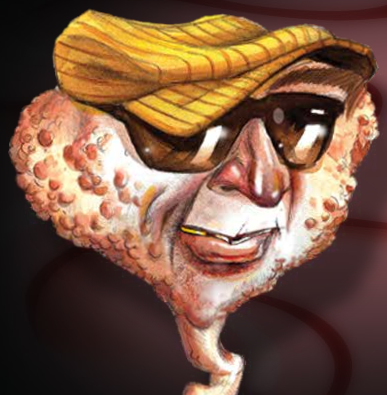
Today I’m honored to be keynoting the 13th Annual Health Internet Conference at Caesars Palace in Las Vegas. So, as Mark Ragan said a couple of weeks ago, now I can tell people, “I’ve played Caesars.” 😉
Here’s how I planned to start my presentation, though I’m not sure it will come out quite like this.
I frequently have people ask me about the frequency of my travel and how I can do it, as they follow my tweets or blog posts. This is the 55th external presentation or Webcast I’ve delivered so far this year, and in October I was in Sun Valley, Scottsdale, Milwaukee, Nijmegen and Amsterdam in the Netherlands, St. Louis, Green Bay, Madison, Minneapolis, and Philadelphia.
This month looks almost as busy. So how and why do I do it?
First, the Web and related tools like the iPhone help me stay connected with the office when I’m traveling. So I can help keep things moving along at home, even when I’m not physically present.
But in another sense, I’m keeping faith with the founders of Mayo Clinic, to whom I will be introducing you shortly. They believed it was essential for them to reach out and learn from others, but that it also was their obligation to share what they had discovered in their practice so that others may benefit.
Social media will be used in health care; the only question is whether it will be led by responsible organizations or by the purveyors of herbal, all-natural Viagra substitutes.
Despite the diffuse nature of the Web in general and social media in particular, I believe it is not only possible for us (and by that I mean all of us in healthcare, not just Mayo Clinic) to lead: I believe it’s a moral imperative. We can do well for our organizations by doing good things in social media. More importantly, patients will do better by becoming more empowered and engaged in their own health and health care. They can learn from credible experts and from each other, and apply those learnings to improve their lives.
I’ve previously said it’s not my goal to convince begrudging skeptics that they should using social media. They won’t do it well, mainly because they will see social media as an extension of the mass media era, and as a former boss used to say, “A man convinced against his will is of the same opinion still.”
My goal is to encourage you, maybe even excite you. You’re most likely here because you sense the amazing potential of the Web and social media.
If you’ve been wanting to implement social media in your organization, I hope to provide you with some concrete examples of success and powerful arguments you can use to help launch your own programs. If our Mayo Clinic example helps you remove internal barriers or work up the nerve to just hurdle them, I will count this a success.
If you are using social media already, I hope to hear your story and what’s worked for you, so we can together help continue the momentum in growth of hospital social media that Ed Bennett has done so well in documenting.
I’ve also embedded the slides from the presentation, which are substantially different from anything you’ve seen from me before. It’s the first time I’ve discussed the 35 Social Media Theses in public. So I hope you will review them and share your thoughts, criticisms, suggested edits and additions.