Portions, Servings and the SMUG Social Media Pyramid

I appreciate all the positive feedback and re-tweets for yesterday’s post on the SMUG Social Media Pyramid. We even have our first graphical representation (click image to enlarge), submitted by Jason Melancon from the Louisiana Public Health Institute (LPHI).

SMUG-social-media-pyramid

One point that Jason mentioned in his email deserves further amplification. He said “I think the servings on social networks (in my own opinion) should be per week as opposed to per day.” And this leads me to the discussion of portion size and servings.

Have you ever noticed after drinking a 20 oz. bottle of Coke, when you turn it around and read the label, that you’ve just swallowed 2.5 servings? Or when you nuke a bag of microwave popcorn, do you always share it with two other people, as the label would indicate you should?

Welcome to the world of unrealistic portion sizes, at least in America. It likely helps to explain our obesity epidemic, but it also has application when we’re looking at our SMUG Social Media Pyramid and what a “serving” is.

On the SMUG Pyramid, essentially any activity qualifies as a “serving.” The tweet I will do about this post is a serving. A reply to those who re-tweet is a serving. And tweeting a link to another interesting article is, too. Relatively easy to get your 6-11 servings per day.

In the social networking sites, the reason I have 4-5 servings per day instead of per week is because posting a link is a serving. So is interacting with someone who writes on your wall, or uploading a photo, or creating an event, or uploading a video.

At the higher levels, Web Video and Blogs, the criterion for what constitutes a serving is a little higher. You can’t do half a video, and you either publish a new blog post or your don’t. But the interacting you do on YouTube, for instance, actually falls more within the social networking servings. So your 4-5 daily social networking “servings” may include comment activity both on Facebook and YouTube.

The other point to remember is that a pyramid like this is just a general guide, and your situation may call for different portions. I’m 6’6″ and weigh (…well, let’s not get into that!) My food portions are going to naturally be bigger than a 5’2″ female. At least it’s how I rationalize eating the whole bag of microwave popcorn. And despite that, I know I don’t always get the five servings per day of fruits and vegetables that USDA suggests.

The SMUG Social Media Pyramid is just a guide; a framework for thinking about social media involvement. Unlike the USDA, I can’t say it’s based on scientific research. I also have to confess that sometimes I get out of balance with it, both in my personal accounts and at work. Sometimes I overload on Twitter, for instance, and don’t get enough servings of the others.

But just as you’re not going to drop dead tomorrow for failing to eat enough fruits today, there’s flexibility with your social media diet too. You’re looking for balance over time for maximum health.

In a future post I’ll discuss the real key to portion estimation, which is serving with your servings.
Join the Revolution!

When I first saw the video I’ve embedded below, it was via an email link from my department chair at work. It’s really cool when your boss’ boss passes stuff like this along!

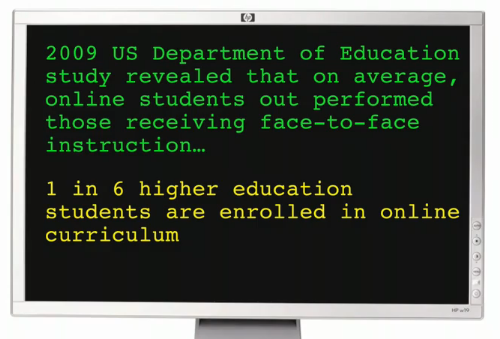
The video also includes a neat statistic that has particular relevance for SMUG and SMUGgles, as captured in this screen shot:

OnlineLearningDeptEducation

Sort of tells me we’re on the right track with SMUG; getting hands-on, online training in social media, using revolutionary tools to learn a revolutionary subject.

Oh yeah, and it’s free.

So here’s the video; you may have seen it, or you may feel like you have anyway. The same music track has been used in at least one similar video, and I’ve seen various versions over the last three years.

A previous video of this genre made the comparison of “If MySpace were a country, it would be the fourth largest…” That was so 2006. This newest version has at least been updated to reflect Facebook’s ascendancy in the English-language general-purpose social networking ecosystem.

But don’t let the fact that you may have seen something like this keep you from clicking the “play” button below. This version has some interesting facts and factoids that will help you in making the case for social media in your organization.

If you want to get hands-on experience with these powerful tools, enroll in SMUG and join the revolution.

BlogWell MSP Presentation

Here’s the presentation I’m giving today at General Mills in Minneapolis, where the Social Media Business Council (socialmedia.org) is holding its BlogWell conference.

I unfortunately won’t be able to stay for the entire event because I have another presentation to do back in Rochester in the later afternoon, but I look forward to following the Twitter stream at #BlogWell. And hopefully I’ll get to meet lots of folks in the time before my 1:30 CDT presentation.

LifeScience Alley Presentation

This morning I have the opportunity to present at a LifeScience Alley educational forum. The title of the presentation is Leveraging Social Media to Reach Customers and Improve Organizational Effectiveness: The Mayo Clinic Perspective.

Here are my slides:

I’m looking forward to this presentation and the ensuing discussion, and hope the conversation will continue here.

Mayo Clinic Social Media Webcast

This afternoon I’m scheduled to present a Webcast on our Mayo Clinic experience with social media. The handout we provided to registered participants was somewhat abbreviated (leaving out some of the intermediate steps in the closing case study), and I added a few other slides after Friday morning, when I had to submit the handout.

If you haven’t yet registered for this FREE webcast, you can still do so until noon CDT today (8/4/09). Go here to join.

Here is the updated slide deck, and I’ve also included some key links below:

See the Press page for some of the stories about social media in health care for which I have been interviewed, including the Forbes.com story from last week and the resulting Information Week piece from yesterday, as well as the interview with Lee Odden he published yesterday.

Our Mayo Clinic blogs include Sharing Mayo Clinic, which has links to the rest of our social media platforms, including the various blogs and our Facebook fan page, Twitter account and YouTube channel.

Here is the link to the Wall Street Journal Health Blog post that incorporated our YouTube video. Here is a recent post on the Mayo Clinic News Blog with both downloadable audio and video clips and a YouTube video. And here is the post where we embedded the “Octogenarian Idols” video.

I hope you will feel free to ask your questions or make comments either below or via the #mayoragan hashtag in Twitter.

If you’re interested in healthcare use of social media, please consider registering for this social media summit Mayo Clinic is hosting and cosponsoring with Ragan Communications. It will be at our Scottsdale, Arizona campus in early October. I think we have a strong faculty and it should be a great gathering of people with a common interest.

Please be sure to vote in the SMUG seal contest, and if you want an example of the SMUG curriculum, the Podcasting courses give you a good taste. See the front page for more of a SMUG overview.