Thesis 4: Social Media are the Third Millennium’s Defining Communications Trend

I don’t think this should really need lots of discussion and proof. In the era of Gutenberg and Luther, only the most profound works could be published via the printing press. Thus Luther’s 95 Theses and other works of eternal significance were candidates for mass distribution. Not much else was considered worthy of the expensive paper on which it would be printed.

And of course in those days mass distribution didn’t mean exactly universal distribution, but only to those who had the unusual opportunity and gift of literacy.

But even with limited literacy, Luther’s theses spread like a virtuous version of pandemic flu. They got people talking.

Over the ensuing 480 years or so, the ability to publish remained scarce and therefore precious. And for the last half century, there was a unique development in that a privileged class of editors and programmers could make tastes, and could decide what news was fit to print or worthy for airing.

So journalists attached to someone who owned a printing press, or (in the U.S.) an FCC-granted monopoly license, were unique in their ability to spread news and views to their community. News organizations sold their wares to consumers, or as Chris Anderson, Clay Shirky and others have noted, more accurately sold (or rented) their audiences to advertisers.

The economics of digital abundance and what Shirky calls unlimited perfect copyability, along with development of tools for self-publishing, means that we no longer are hostage to this privileged class. People like us can start a blog, or a podcast, or a YouTube channel that can be accessed from around the globe.

It doesn’t mean we necessarily have a huge audience for our views, but it does give us access, at least loosely based on merit, as judged by individuals instead of only the tastemakers.

The fact that only perhaps 10 percent of potential publishers actually avail themselves of these tools doesn’t lessen their significance.

In warfare the credible threat of force can be just as effective in accomplishing goals as the use of force is. Likewise, the fact that almost everyone has a digital camera at all times (thanks to the ubiquity of camera phones) means the potential cost of an organization treating someone badly is much higher.

In my presentations, I frequently illustrate this point with portions of the Social Media Revolution video, which begins with two questions:

Is social media a fad? Or is it the biggest shift since the Industrial Revolution?

While I agree the development of social media tools is as significant as anything since invention of the steam engine, the cotton gin and other outgrowths of the Industrial Revolution, I prefer to consider social media in the context of communications trends. In that regard, I believe it’s the biggest shift since Gutenberg. At least since Marconi.

In Thesis 3, I will discuss the anomalous (that’s a pretty sophisticated, Chancellor-like word, isn’t it?) nature of the mass media era, and why the era has ended, even as we continue to have mass media outlets in our communications ecosystem.

The fact that Gutenberg’s invention defined the 16th through the 19th centuries didn’t mean it completely replaced verbal communication. And broadcast media didn’t completely replace print in the 20th century. But each defined their era.

Likewise, social media define the Third Millenium, even though they haven’t (and won’t) completely replace mass media.

Meanwhile, here’s a screen shot from the Social Media Revolution video that puts it all in context in just a single frame:

Picture 8

If you have 4:22 to spare, here’s the video in its entirety:

So how do you answer those questions? To what would you compare the social media revolution?
Thesis 10: Social Media Can’t Make Up for Bad Products or Poor Service

Picture 7

Social media are not the panacea for all that ails the relationship between organizations and their customers or other stakeholders.

If you treat people badly, they now have not only the opportunity to take the story public, which they always had, but also the ability to tell the story themselves instead of having to rely on third parties like the news media to spread the word.

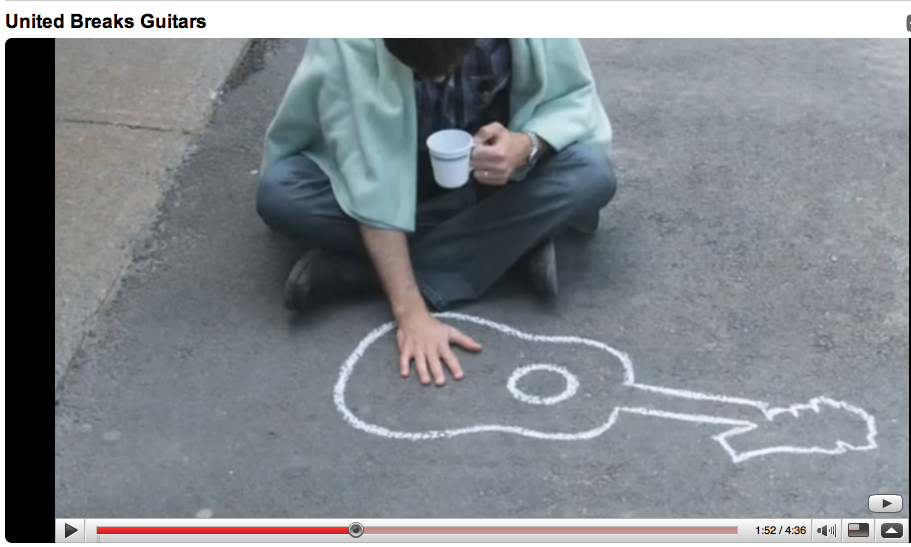
And of course, as we saw this year in the case of Dave Carroll’s spat with United Airlines, sometimes the story can both go viral and lead to mainstream news media coverage.

The basic story, if you haven’t heard, is told in this United Breaks Guitars video. The customer service representative could have kept the video from being made by simply agreeing to Mr. Carroll’s request for $1,200 in flight vouchers to reimburse his expense for fixing is $3,500 Taylor guitar. It would have cost United nothing in cash, but when Ms. Irlwig said “no” he said something to the effect, “Fine, I will just make a series of three YouTube videos with my story.” Here’s the second installment. If you haven’t watched both of those, take a minute to do so now. I’ll wait.

OK, now that you’re back, here are a few lessons or observations from this saga:

  1. This video didn’t happen because United had a YouTube channel. One of the fears some people have about engaging in social media is, “What if people say bad things about us?” But this video wasn’t posted to the United channel: it was on the SonsofMaxwell channel, which belonged to Mr. Carroll’s band.
  2. This video resonated, which is why it went viral. Anyone who has traveled by air extensively likely has some kind of horror story about poor customer service. If the video didn’t fit built-in perceptions, it wouldn’t have gotten anything like this attention.
  3. Treating the customer right is the solution. After nine months of haggling, Mr. Carroll was just looking for a way to recover what he had spent on guitar repairs. From his perspective, flight vouchers would have been almost as good as cash, as it would at least let him pay less out of pocket for future travel. If Ms. Irlwig agrees, the video doesn’t happen.

Social media can provide great listening tools to alert you to a problem that could blow up into a PR nightmare. But they don’t do any good if you don’t act based on what you hear. In this case, Mr. Carroll was right in Ms. Irlwig’s ear. No complicated listening tools needed. If you’re not going to do the right thing for your customers, social listening tools will be of little value.

As Amy Mengel put it at the time, the secret to avoiding a YouTube crisis is: “Don’t suck so much in the first place!

Social Media 401: Vince Muzik Case Study

Vince Muzik
Vince Muzik

I’ve known Vince Muzik for nearly four decades, ever since I took piano lessons from his mother, Jan. (Yes, my piano teacher was Mrs. Muzik.) But it gets even better: Vince’s father, Conrad, was the Austin High School band instructor, so when I played trombone (until 9th grade) my instructor was… Mr. Muzik.

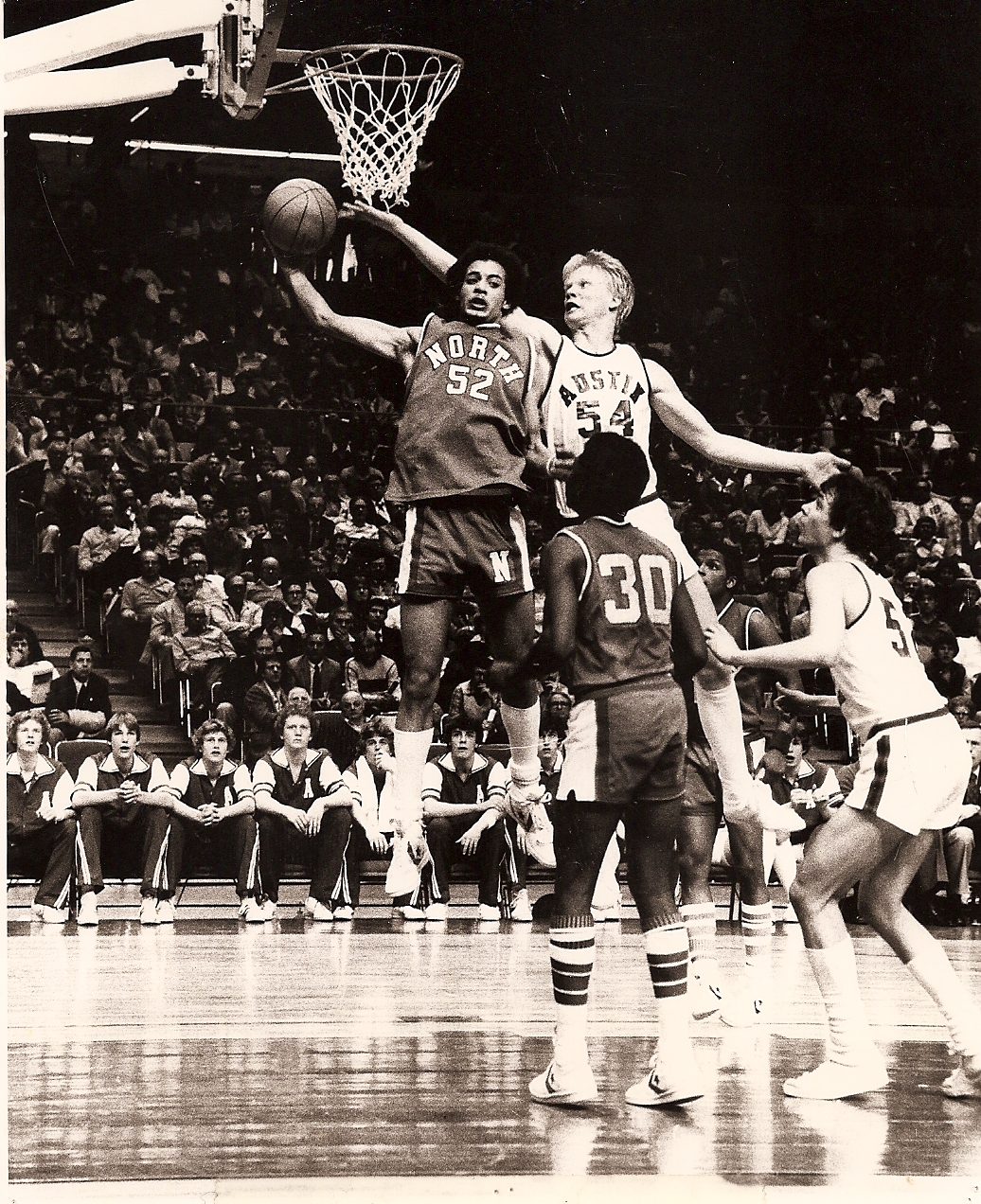
Vince’s love was photography, though, and particularly relating to sports. He got his first chance to shoot a big statewide event when he was a teenager, and the Austin Daily Herald got him press credentials for our basketball team’s trip to the state high basketball tournament in 1981. We were 22-0 going into the tournament, but faced the also-unbeaten (and defending champion) Minneapolis North in the first round. Here’s a photo Vince took at that game (can you tell which one is me?)

One of Vince's first published photos

Although I didn’t get that rebound, we did come back to win the game after being down 31-24 at halftime. We beat another undefeated team, Chaska, in the semifinals, before losing to Anoka in the championship game. Here’s my admittedly self-serving highlight video from that experience, which is only available thanks to another friend whose brother was one of the few consumers who had a VCR at the time:

Vince has stayed interested in sports, and has gotten opportunities to shoot some much bigger events with much better athletes. We reconnected this year when he heard about what I was doing in social media at Mayo Clinic and about SMUG, and he asked me for advice about a really exciting project he had in mind. Now that he’s getting it off the ground, I want to highlight it as a great example of using social media tools to tell a story.

Vince lives in the Twin Cities now, and has made some good connections with Cretin-Derham Hall, where American League MVP Joe Mauer of the Minnesota Twins went to high school. Other notable alums include hall-of-famer Paul Molitor, 2000 Heisman Trophy winner Chris Weinke, Baltimore Ravens All-Pro Center Matt Birk and current Notre Dame star receiver Michael Floyd.

This year, CDH has the consensus number one football recruit in the nation, Seantrel Henderson, and Vince’s great idea was to tell the story of what it’s like to be that guy, giving a behind-the-scenes look at the recruiting process.

Vince is a great storyteller, but his niche has been photography. And sometimes a niche can become a pigeonhole. But with social media, he can break out of that niche. He’s getting video of Seantrel talking about his experiences, and sending a Flip video camera with his parents as they go along on official visits. Here’s the video Vince posted of Seantrel’s Ohio State visit and his conversation with former Buckeye Chris Carter and with coach Jim Tressel:

This video has already been picked up by the Cleveland Plain Dealer, and SportsIllustrated.com also asked Vince to send it to be embedded there.

I don’t know where this will end up, and neither does Vince, but one thing it shows is how the low cost and easy availability of social media tools make it possible for someone with a good idea to just make it happen instead of needing to pitch it in advance to a mainstream media outlet. As he says:

I suppose you could say this is part of a social media documentary project I’m doing on Seantrel about recruiting and his life as the No. 1 recruit in the country. If it works out, someday you’ll be able to download it and watch it on your computer or iPhone or Blackberry. Or I may just keep following him until he gets to the NFL. We’ll see.

When he was a teenager back in Austin, Vince had to get the local newspaper to bless his photography project before he could do it. Now he is using YouTube, Twitter (@VMuzikman) and a WordPress.com blog as his publishing platform, with a Flip camera as his main video source. His first video is up to about 12,000 views as of this writing.

Vince is a star SMUGgle who is putting the MacGyver mindset into action.

I hope you will follow what he’s doing and help spread the word about his #Seantrel project, and if you have suggestions for how he can improve, give him feedback.

More than that, I hope you will follow his example and just dive in and start using social media tools creatively in your projects.

Closing the Gap with ICSI

[ratings]

I’m attending a conference in Bloomington, Minn. this morning, called “Closing the Gap: Innovative Strategies to Patient Involvement,” sponsored by ICSI, Institute for Clinical Systems Improvement. I’m doing a presentation on…you guessed it: Social Media.

Here are my slides:

I’m encouraging participants in the conference to get involved with the discussion through the #ICSIgap hashtag on Twitter.

American Heart Association Social Media

I’m honored to be leading a conference call this afternoon with representatives from local chapters of the American Heart Association, discussing how they can use social media to spread the word. The conference call runs from 1-2 p.m. CST, and we’ll be using the #AHAchat hashtag for discussion.

The slides for my presentation (which will be about the first half or so of the discussion) are embedded below. They’re based on my 35 Theses, but I’ve incorporated some examples from AHA and their existing use of social media, and I’m not including the Octogenarian Idols section. If you want to contribute to the discussion via #AHAchat on Twitter, I’m sure you’d be welcome. Otherwise, please feel free to join in the comments on this post.

If you’re not sure how to participate in a Twitter chat, check out Twitter 115 and Twitter 116 for tips.

Here is the Twitter search widget so you can track the conversation, even if you haven’t yet joined Twitter: